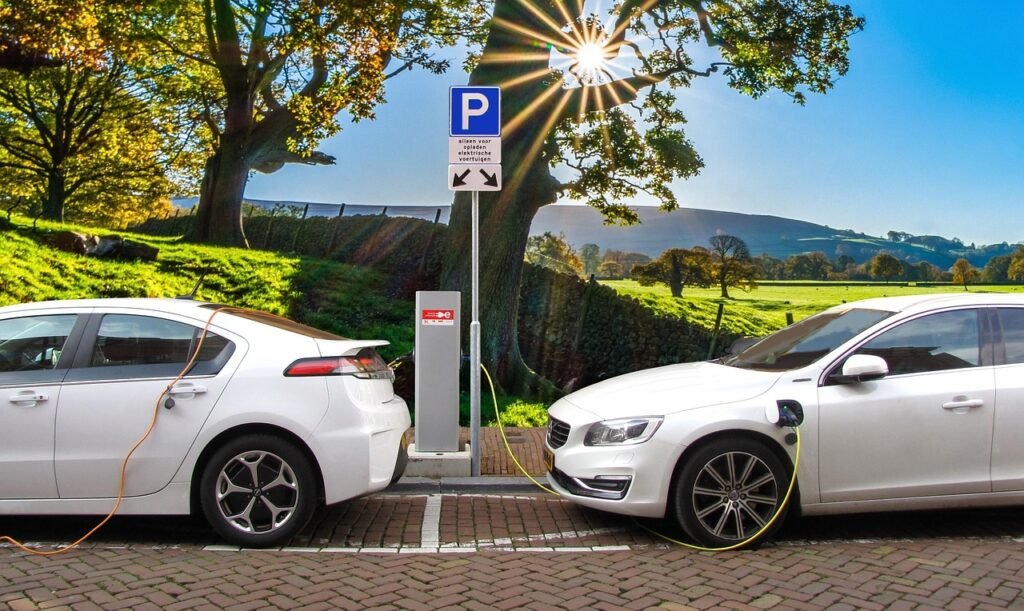

Have you ever thought about buying an electric or hybrid car?
Most of us get excited about the idea of lower fuel costs, zero emissions, and that instant torque that EVs are famous for. But then reality hits: insurance. And if you’ve already checked a few quotes, you probably noticed—premiums for EVs and hybrids are often much higher than for gasoline cars.
This isn’t just a local issue. Around the world, insurance companies are trying to catch up with the EV boom. Let’s break down what’s really happening, why your EV policy feels expensive, and what the future of car insurance looks like globally.
🌍 A Market Growing at Lightning Speed
The shift toward electric and hybrid cars is not just hype—it’s data-driven.
- The global EV insurance market is forecast to jump from $64 billion in 2022 to almost $687 billion by 2029. That’s a growth rate of over 40% every single year (Fortune Business Insights).
- Another study predicts the market will reach $5 billion by 2025, growing steadily through 2033 (Market Report Analytics).
- By 2034, it could skyrocket to $555 billion (Insurance News Net).
So yes—EV insurance is already a multi-billion dollar industry. And it’s growing faster than most traditional insurance sectors.
🚗 Why EV & Hybrid Insurance Costs More
Here’s the truth: insurance companies aren’t trying to punish EV drivers. The higher premiums come down to a few tough realities.
1. Expensive Repairs
If you scratch a regular bumper, it’s just bodywork. Scratch a bumper on a Tesla or Hyundai Ioniq, and you may be replacing sensors, cameras, and smart systems. That drives costs up fast.
- Average EV repair claim in the U.S.: $6,066 (about 30% higher than gasoline cars) (WSJ).
2. Batteries = Big Bills
The heart of an EV is its battery. But here’s the problem: batteries aren’t easy to fix. Even minor damage can require a full replacement worth thousands of dollars. Some insurers see this as a huge risk.
3. Accident Severity
Studies show EVs are involved in 17% more accidents and their claims are 34% more severe compared to traditional cars (GreenCars).
4. Global Variations
In some countries, EV insurance is slightly higher—maybe 15–20%. But in others, like the UAE, premiums are on average 72% more expensive than gas cars (Times of India).
⚡ Bright Spots: How the Industry Is Adapting
It’s not all doom and gloom. Insurers and regulators are getting creative to make EV ownership more affordable.
- Special EV policies: Coverage now often includes home charging stations, public charging mishaps, and even battery-specific coverage (Peakes Insurance).
- Usage-based insurance: Drive less, pay less. EVs pair perfectly with telematics-based policies.
- Partnerships with automakers: Big insurers are working directly with Tesla, BYD, and others to streamline repairs and offer better rates (AXA XL).
- China’s regulations: In 2025, China rolled out first-of-its-kind EV insurance rules to lower ownership costs and improve fairness (Reuters).
- Battery swapping: Imagine pulling into a station and swapping a dead battery for a fresh one. If this becomes mainstream, it could dramatically cut replacement costs and reduce premiums (Financial Times).
💡 Tips for EV & Hybrid Owners
If you’re already driving (or planning to buy) an EV or hybrid, here’s how to protect yourself from sky-high insurance bills:
- Compare multiple quotes — don’t just accept the first offer.
- Ask for EV-specific coverage — some policies are tailored for batteries and charging.
- Consider telematics — insurers reward careful drivers with discounts.
- Bundle policies — combining home and auto insurance can often save 10–20%.
- Stay updated on regulations — countries like China and parts of Europe are introducing EV insurance reforms.
📊 Quick Snapshot
| Factor | What It Means for You |
|---|---|
| Market Growth | Insurance industry for EVs is booming worldwide. |
| Repair Costs | 30% higher on average due to complex parts. |
| Battery Risks | Replacement can cost $10k+ if damaged. |
| Premiums | 15–60% higher, up to 72% in UAE. |
| Positive Trends | New policies, telematics, and regulations helping reduce costs. |
🌱 Final Thoughts
Driving an EV or hybrid feels like stepping into the future. The silence, the instant acceleration, the sense of being part of something greener—it’s addictive. But insurance is the part nobody posts on Instagram.
Right now, yes, you’ll probably pay more to insure your EV. But the industry is changing quickly. With smarter policies, better tech, and regulatory support, premiums will eventually balance out.
Until then, the best advice is simple: shop smart, know your options, and take advantage of EV-friendly insurance products.
Because in the long run, owning an EV isn’t just about saving the planet—it’s also about saving your wallet.